The problem with selling automation on paper
Your customer is being asked to spend half a million euros — or five million — on a system that doesn't exist yet. You're asking them to approve a purchase order based on a 2D drawing, a specification document, and a presentation full of bullet points.
The people making the decision aren't all engineers. The plant director, the finance director, the operations VP — they struggle to picture what they're buying from a CAD screenshot. And when they can't picture it clearly, they hesitate. They ask for another meeting. They want more time to think. The deal slows down or stalls entirely.
A 3D demo closes the imagination gap. When your customer watches their robot cell running, their parts moving through the sequence, their specific layout in motion — the decision becomes concrete. They're not imagining what they're buying. They can see it.
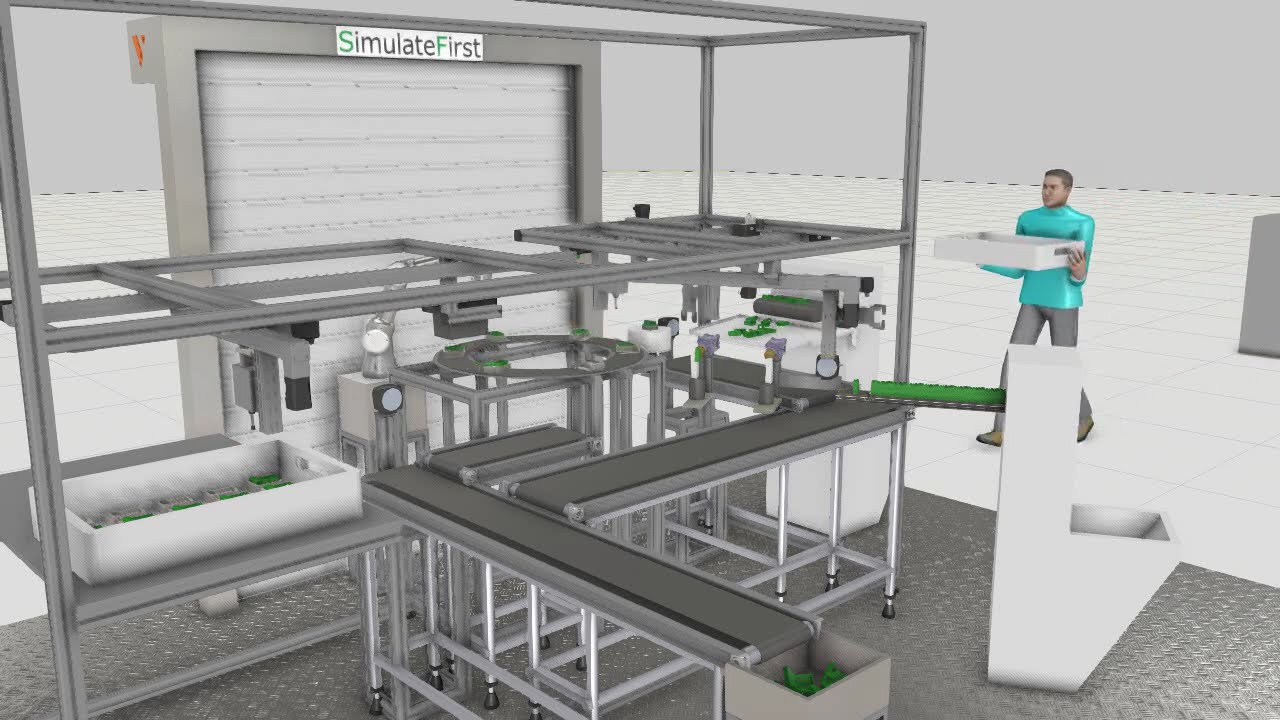
See it in practice
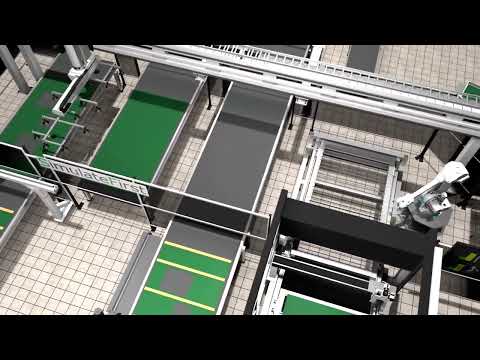
Automated wall assembly line — robot kinematics & laser cutting validation
Visual Components · Manufacturing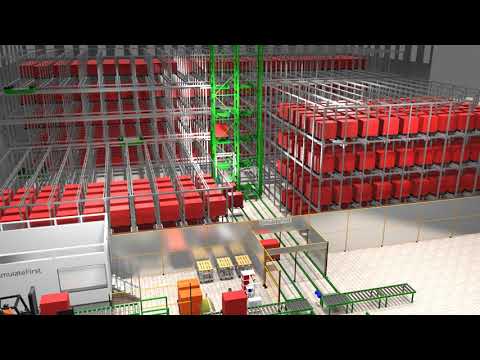
Automated pallet warehouse — shuttle & lift coordination demo
Visual Components · Logistics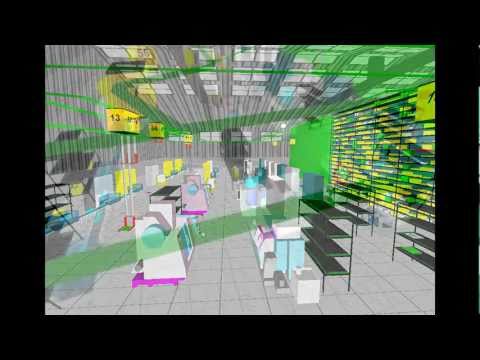
Plant-wide digital twin — full production & logistics animation
Enterprise Dynamics · ManufacturingWhat we build for you
We create Visual Components simulation models of your automation solution — built from your CAD data and system design — and produce the output formats you need for the sales cycle:
Proposal video
HD recorded walkthrough of the simulation — your system running, narrated or captioned, ready to embed in a proposal or email to the decision-maker who missed the presentation.
Live presentation model
An interactive Visual Components model you can run in real time at a customer meeting or trade show — zooming in, changing the view, pausing and explaining each step live.
Trade show loop
A seamlessly looping animation optimised for exhibition stand screens — no presenter needed, draws attention automatically, shows your solution at its best without any effort from your team.
What we need from you to start
We work from whatever CAD data you have available. The more detail, the faster the model build — but we can work with early-stage designs too:
- Ideal: STEP or native CAD files of the cell, robot selection, fixture drawings, process sequence description
- Sufficient: Layout sketch with dimensions, robot model, description of the picking/assembly/welding sequence
- Minimum: A brief of what the system does — we scope assumptions with you and build from there
If you have an existing Visual Components licence and want to run the model yourself after delivery, we can provide the native VC file. If not, the video and presentation outputs are standalone.
How it's produced
Brief & scope
A short call or email exchange to understand the system, the customer, the proposal timeline, and the key moments you want the animation to show. We agree on scope and delivery date — typically 2–4 days for a single cell, 1–2 weeks for more complex systems.
Model build
We build the Visual Components model from your CAD data — robots, fixtures, conveyors, safety fencing, and any key peripheral components. Parts are modelled moving through the sequence.
Animation & review
We produce a first-pass video. You review it and request any adjustments — camera angles, sequence detail, adding or removing elements. One round of revisions is included as standard.
Final delivery
HD video file, model file (if requested), and any trade show loop or presentation version. Delivered before your deadline, with the model ready to extend for engineering or commissioning if needed.
The model doesn't stop at the sale
One of the most compelling arguments for investing in a demo model early is what happens after you win the project. A Visual Components model built for a sales presentation can be extended — at a fraction of the cost of building from scratch — into:
Clients who commission the demo model at the proposal stage often recoup the cost several times over in engineering and commissioning savings on the same project.
Tools & output formats
Output resolution up to 4K. Delivery via WeTransfer or shared drive. NDA signed before any CAD data is shared — standard on every project.