Why the terminology is a mess
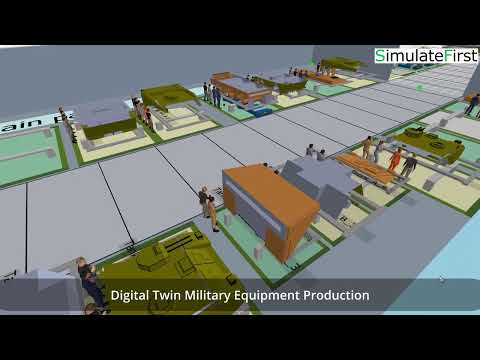
If you've attended a manufacturing technology conference recently, you've heard "digital twin" applied to everything from a 3D CAD model to a real-time production scheduling system to an IoT sensor dashboard. Machine vendors call their monitoring software a digital twin. ERP consultants call their planning modules a digital twin. Simulation vendors call their offline what-if models a digital twin.
Most of these uses are wrong, or at least imprecise. The confusion matters practically: if you ask for a digital twin and get a visualisation, or ask for a simulation and get a continuously-connected live system, you'll spend the wrong amount of money solving the wrong problem. This guide gives you the definitions that actually hold up technically — and help you specify what you need.
The one-sentence distinction: A simulation answers "what would happen if." A digital twin tracks "what is happening now" — and uses that live knowledge to answer "what will happen next."
What a simulation actually is
A simulation is a model that runs offline to answer hypothetical questions. You build it once, feed it data, run it many times with different configurations or assumptions, and compare the outputs. The real system doesn't know the simulation exists. The data flow is one-way: from your process into the model. The model never writes back to the process.
Simulations are used for design decisions — before the factory is built, before the AGV fleet is ordered, before the production line is reconfigured. They answer questions like:
- How many vehicles do we need to hit this throughput target?
- What happens to cycle time if we add a second welding station?
- Which routing algorithm performs better under peak load conditions?
- What is the probability that our current capacity can absorb the new product launch?
You run the model, get the answer, make the decision, and the simulation's job is done. You might re-run it later when assumptions change, but it doesn't need to stay connected to anything.
What a digital twin actually is
A digital twin is a model that maintains a live connection to the real system it represents. As the real system changes — machines fail, orders arrive, operators call in sick — the twin updates automatically. The data flow is bidirectional: real-world state flows into the twin, and the twin's outputs (a new schedule, a dispatch recommendation, a maintenance prediction) flow back to inform real-world decisions.
The defining characteristic is frequency. A digital twin isn't something you run occasionally — it runs continuously or on a tight cadence (daily, hourly, per event). Its value comes from the fact that its state is always current, so the decisions it supports are always based on what's actually happening rather than what was planned to happen.
Side by side: the real differences
| Property | Simulation | Digital twin |
|---|---|---|
| Data connection | Offline — uses historical or design data | Live — reads current state from MES/ERP/sensors |
| Frequency | Runs on demand, occasionally | Runs continuously or on tight cadence |
| Primary purpose | Answer "what if" design questions | Support ongoing operational decisions |
| Output | Report, recommendation, validated design | Updated schedule, dispatch, prediction |
| Integration required | None — model is standalone | Yes — API or OPC UA connection to live system |
| Typical timeline | 1–3 weeks | 8–16 weeks |
| Right when you need to… | Make a design or investment decision | Improve daily operational performance |
When to use simulation
Simulation is the right tool whenever you're making a decision that can't be reversed cheaply — ordering hardware, reconfiguring a production line, choosing between two facility layouts. The question has a definite answer you need before committing resources, and once you have the answer, the simulation has done its job.
- AGV fleet sizing before hardware purchase
- Production line capacity planning for a new product launch
- Robot cell layout and cycle time validation before fabrication
- Warehouse slotting and throughput analysis
- Commissioning risk assessment for a new line — running real PLC code against a virtual machine (this is virtual commissioning, a specific type of simulation)
If your question is "should we invest in X," simulation almost always gives you a better answer faster than any alternative short of building X and measuring it.
When to use a digital twin
A digital twin is the right tool when your decision needs to be made repeatedly — daily, per shift, per order arrival — and the quality of that decision depends on knowing the current state of the system, not just its designed behaviour.
- Daily production scheduling: your plan from yesterday is obsolete because of machine downtime, material delays, and order changes overnight
- Predictive dispatch: which AGV should take the next job based on current positions and battery levels
- Delivery date commitment: if a new order arrives, what is the probability it can be completed on time given current queue depth?
- Condition-based maintenance scheduling: when should this machine be taken offline for maintenance without disrupting throughput?
A practical test: If you would run the same analysis again tomorrow with updated data and get a different answer, you need a digital twin. If you run it once and the answer is stable until the system changes fundamentally, a simulation is enough.
Can they work together?
Yes — and in well-designed systems, the simulation becomes the twin. The typical progression for a production planning system:
- Build the simulation: Model your production system offline using historical data. Validate it against known outcomes. Use it to answer the initial design questions (optimal batch sizes, bottleneck identification, what-if for new equipment).
- Add live data integration: Connect the validated simulation model to your MES or ERP so it reads current machine states, order queues, and material availability automatically.
- Switch to daily cadence: The model now runs every morning on fresh data. The output — a revised schedule with delivery probabilities per order — goes back into the planning system. This is the digital twin.
This path is safer than building a twin from scratch: you know the model logic is correct before you trust it for live operational decisions. It also means the simulation ROI (the design decisions you made better) is already banked before the twin costs begin.
What you get at the end
If you come to us uncertain whether you need a simulation or a digital twin, we scope both options explicitly — what each costs, what decision quality improvement each delivers, and which one the project economics support. We've declined twin projects where a simulation would have answered the question for a fifth of the cost.
Not sure which tool your project needs?
Describe your decision. We'll tell you whether simulation or a digital twin is the right fit — at no cost.